Lockvogel mit Golfei (Decoy with Golf Egg)
2026
Scultpure
Dimensions: L 45 x W 30 x H 35 cm
Material: Golf ball, golf tee, wire, cable scraps, straw, plastic, acrylic paint, clear varnish
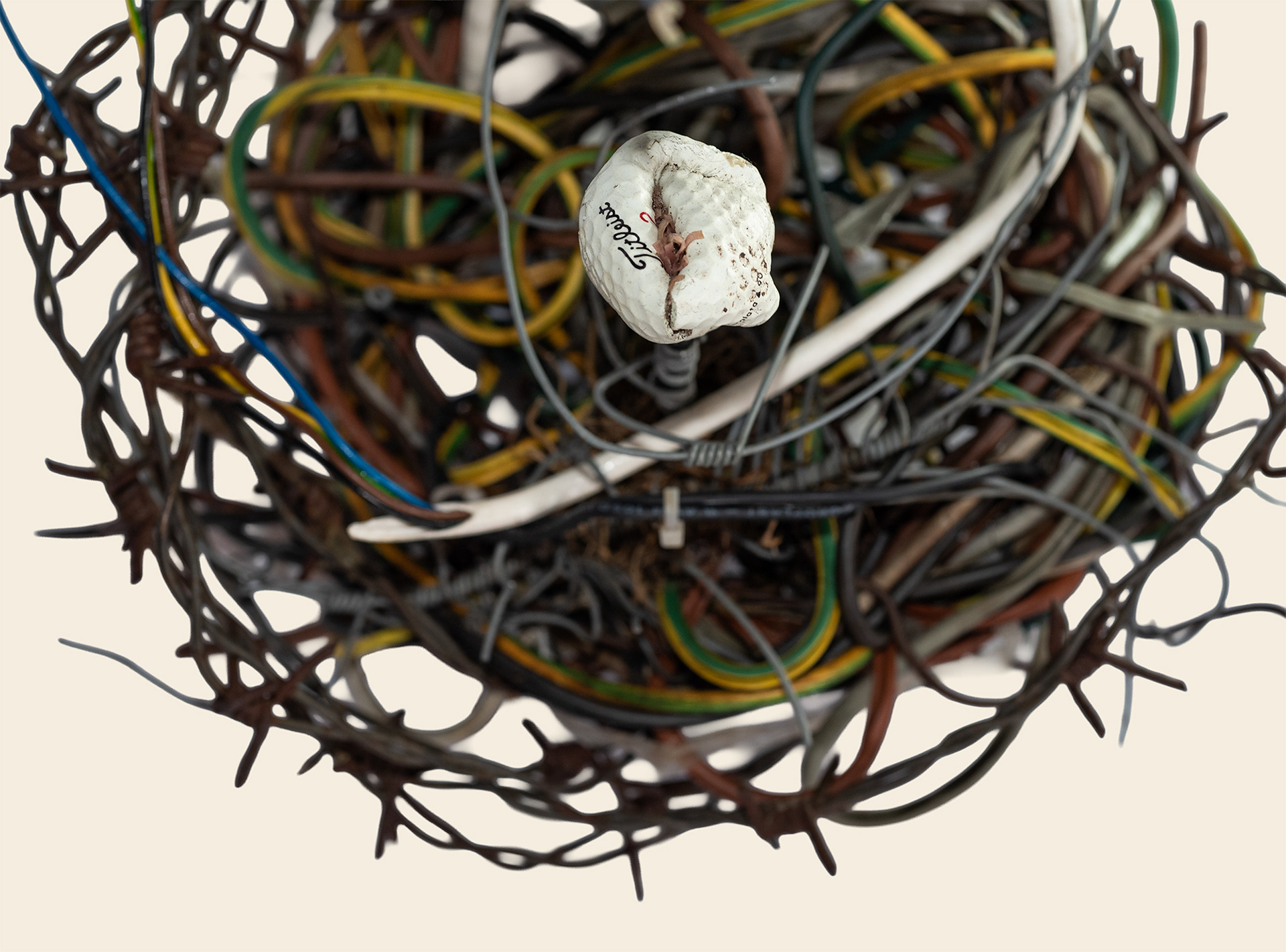
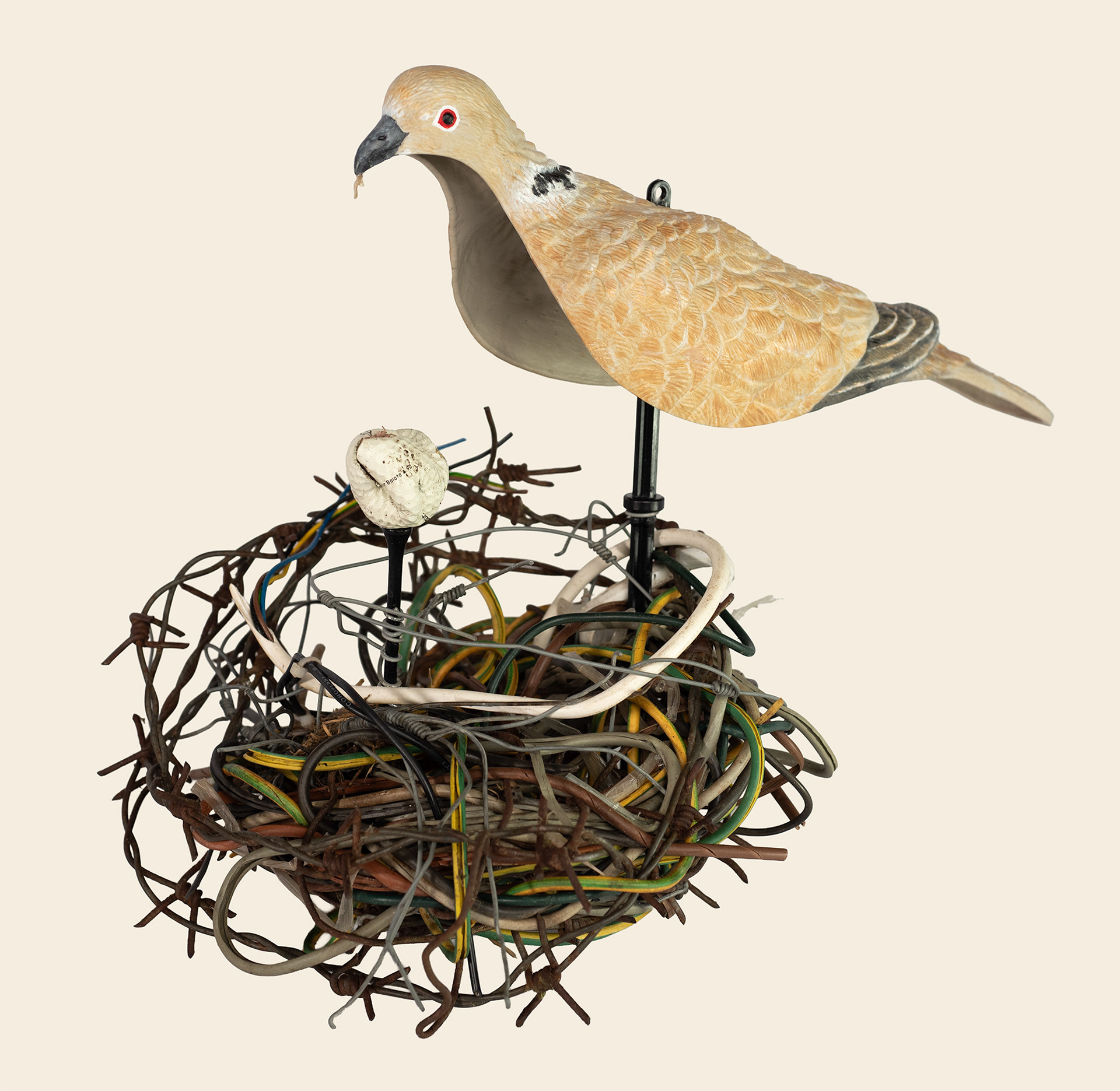
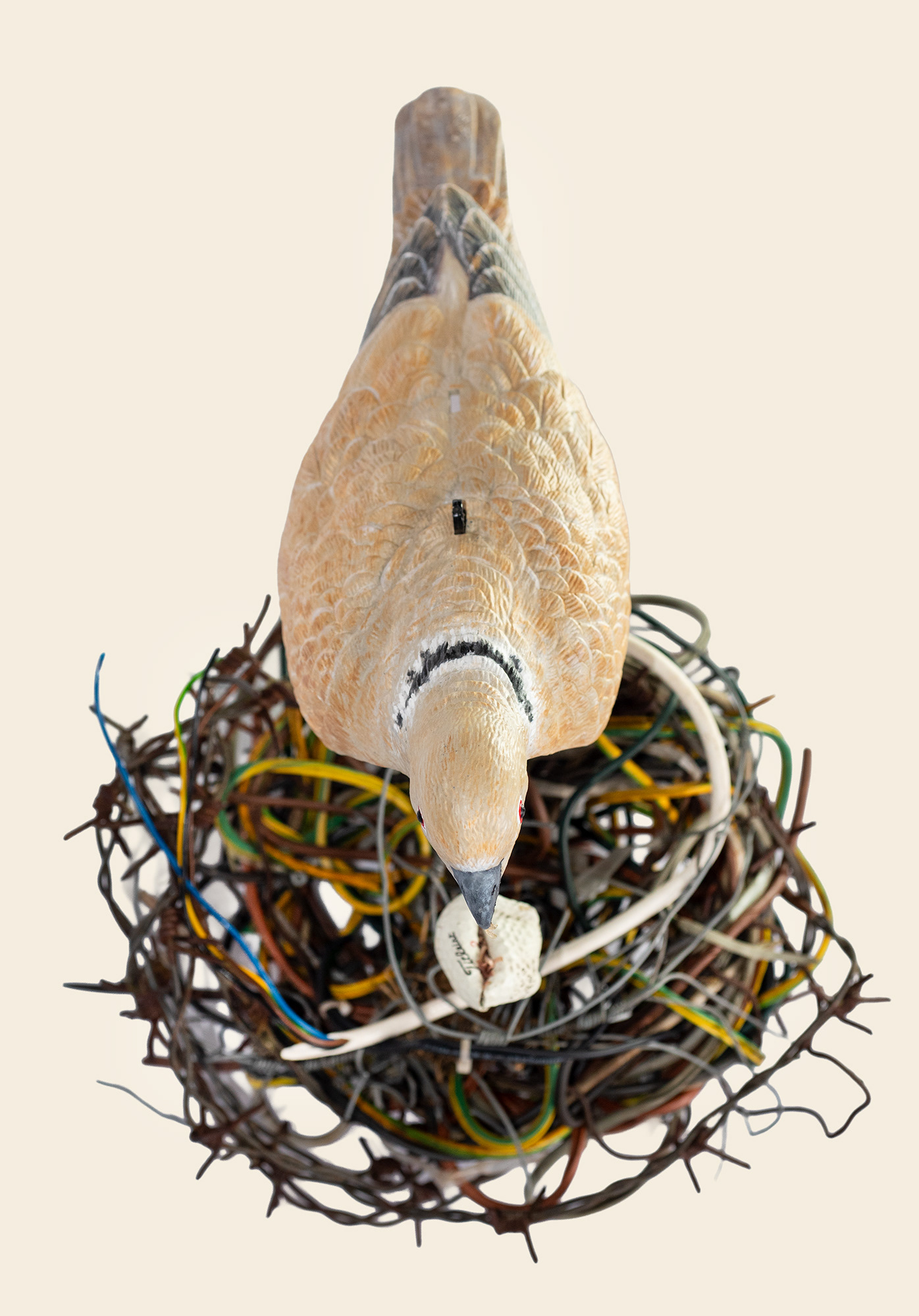
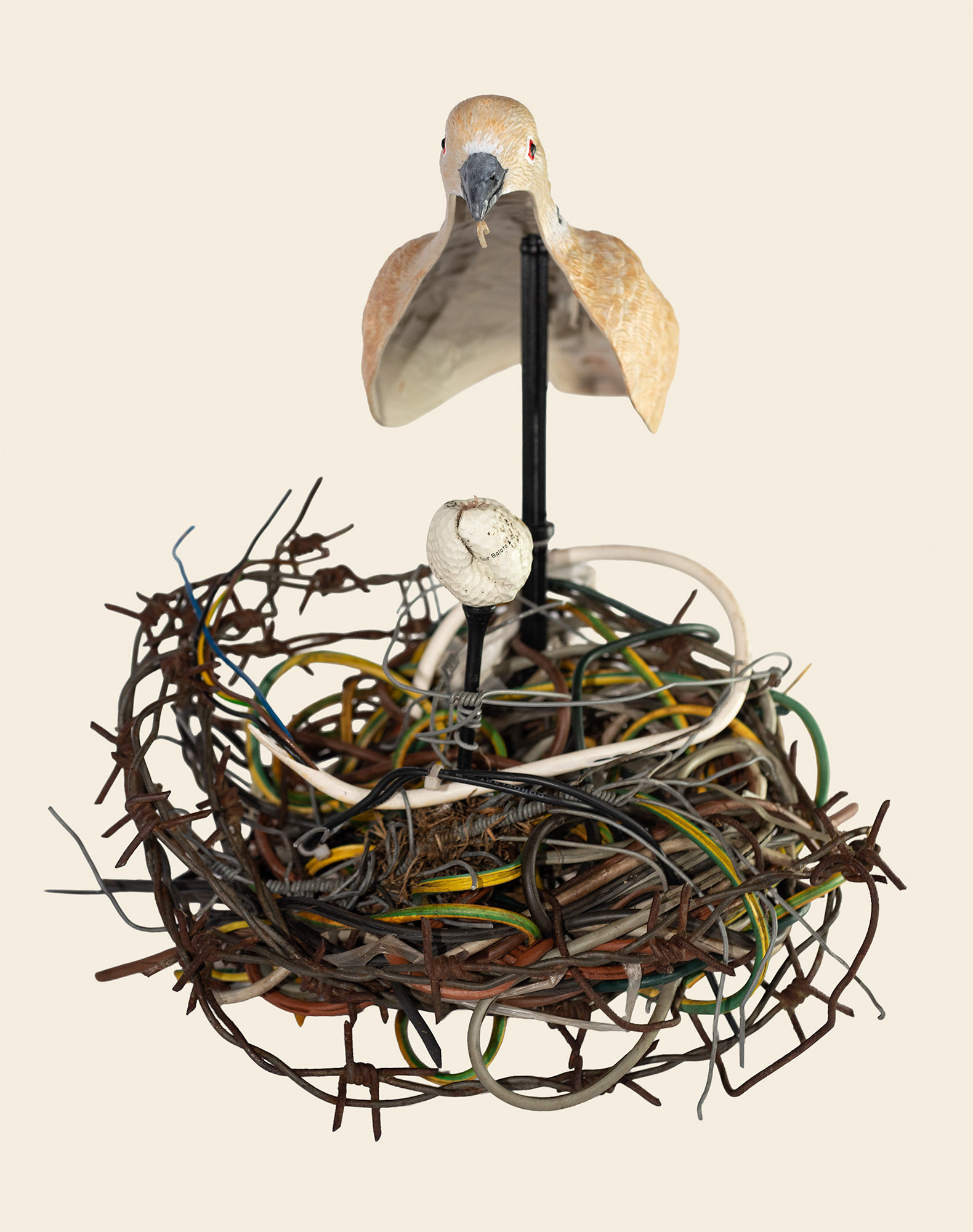
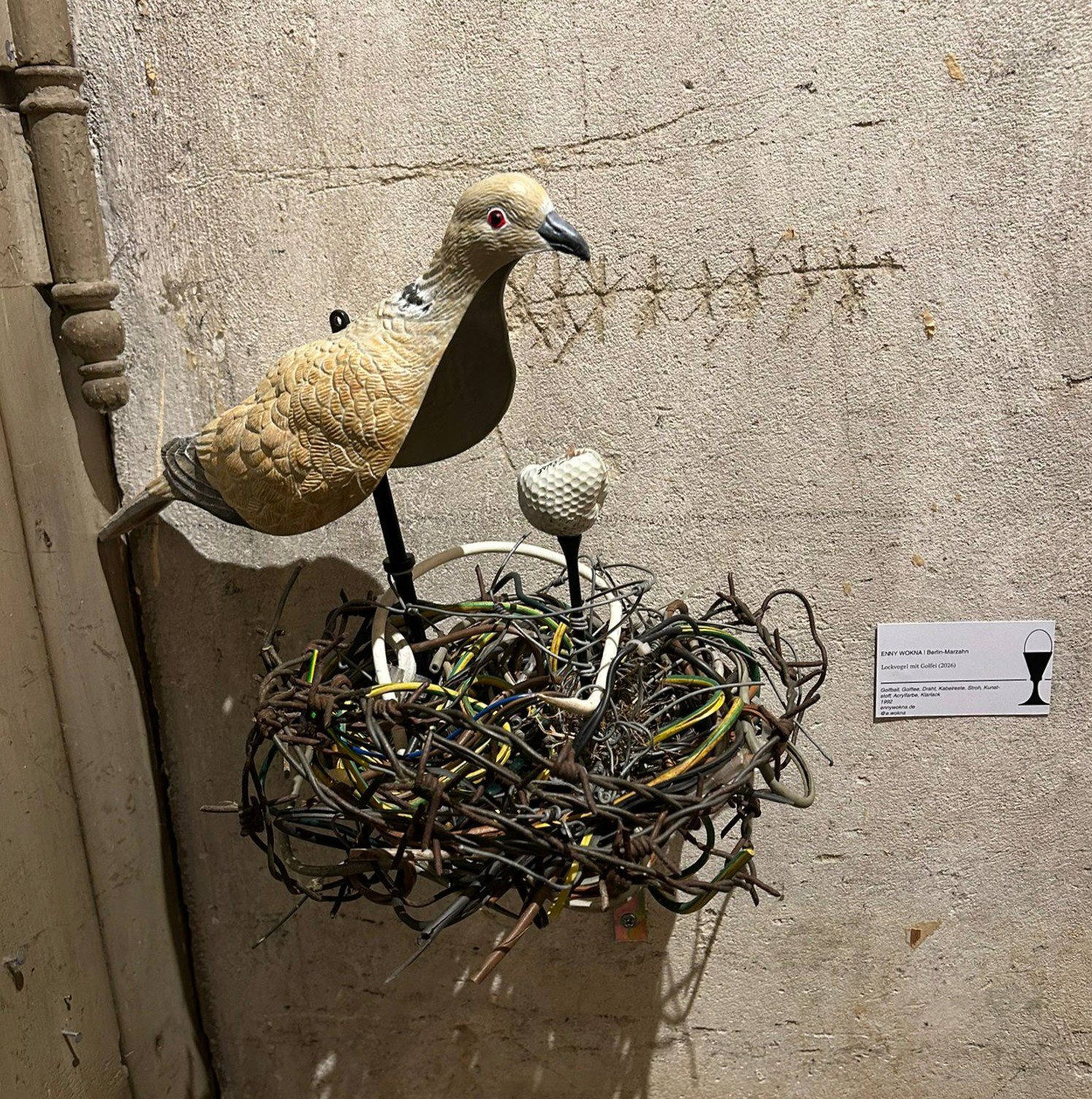
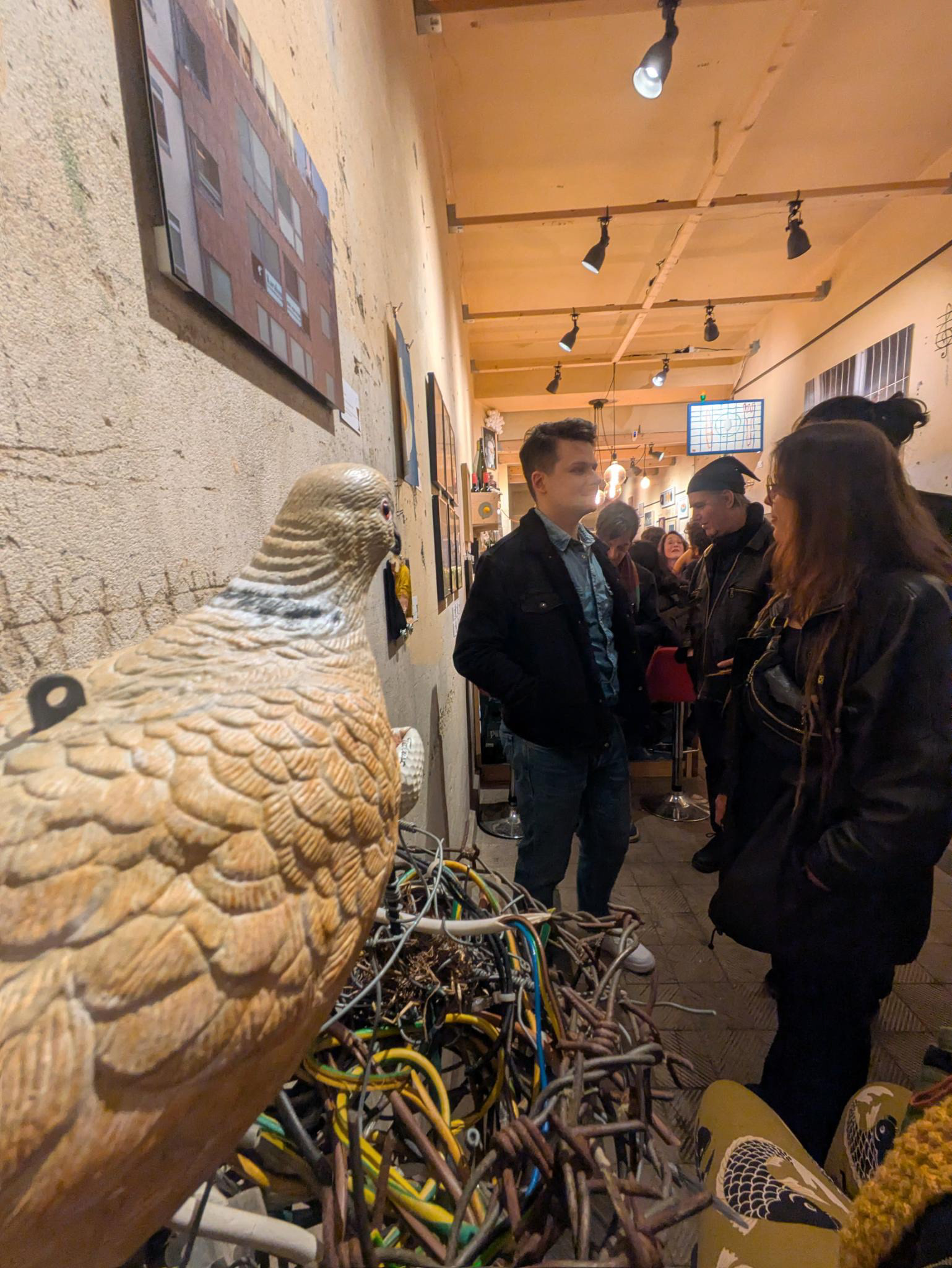
“Lockvogel mit Golfei" (Decoy with Golf Egg) presents a crushed golf ball – found in a forest – placed inside a nest. The nest is made of scrap materials and is modeled after that of a Eurasian collared dove. While these doves typically build their nests from twigs, they sometimes also incorporate electronic waste, as documented by nature and wildlife photographer Ingo Arndt in his photo book “Architektier”.
At the edge of the nest sits an artificial decoy bird in the form of a collared dove. Such decoys are usually used to attract wild birds, either for hunting or for photography. The plastic bird consists only of an upper, hollow shell and is mounted on a rod. In its beak, it holds fragments of rubber bands that also protrude from the golf ball.
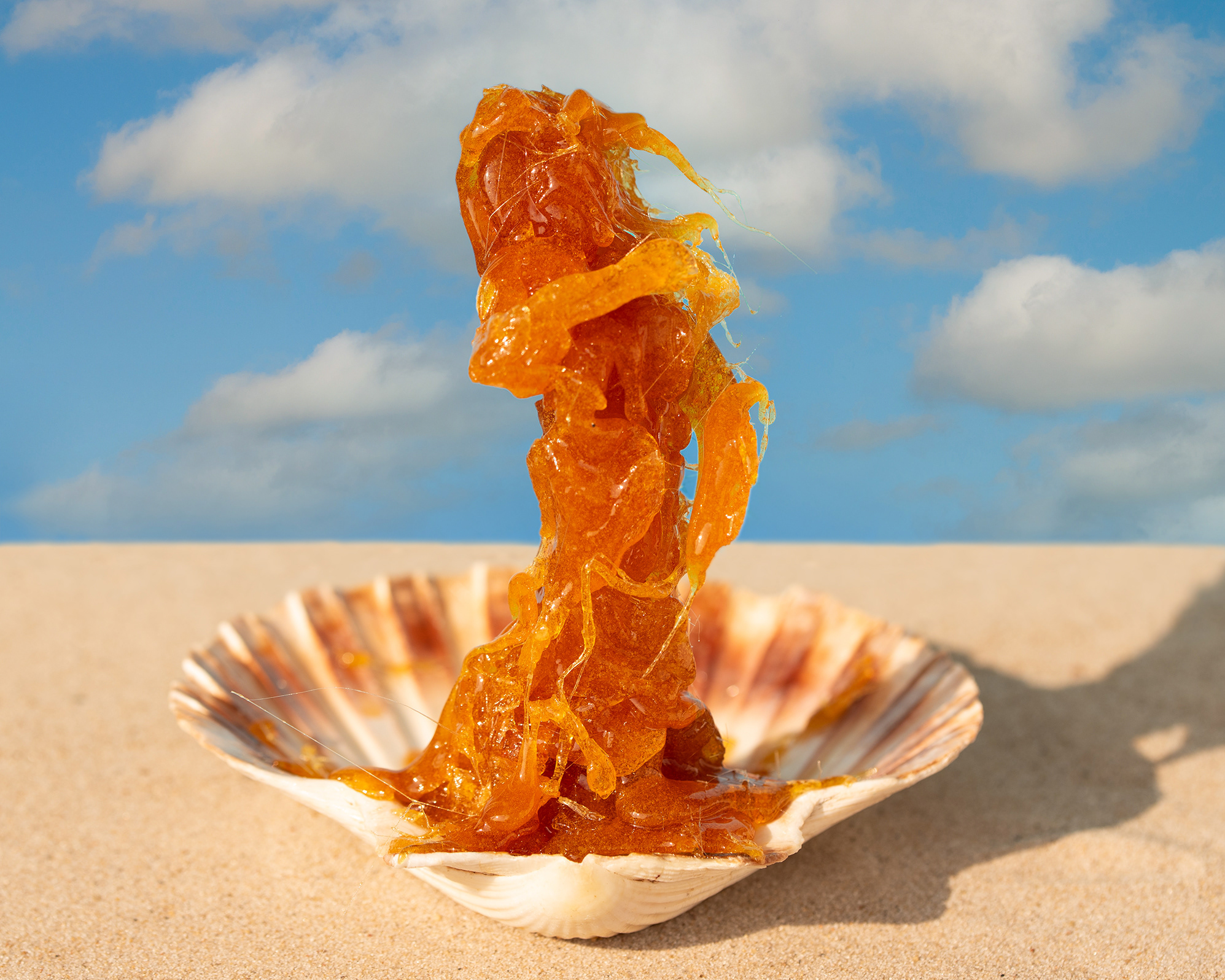
An ambiguity emerges in how the scene can be read: the rubber bands may be interpreted as a hatching creature, as entrails, or as worms. It therefore remains unclear whether the scene depicts an act of feeding or of devouring – both forms of connection. At the same time, parts of the nest are made of barbed wire, giving it a threatening, defensive quality that can also be understood as protective of the golf ball. The sculpture thus carries both dark, dystopian undertones and something tender, even caring.
The work explores the entanglement of humans and animals: while humans create artificial bird nests as decorative objects, birds in turn make use of human-made artifacts as building material. Both humans and animals, in certain situations, use inanimate objects as surfaces for projecting experiences of closeness and relationship.
The golf ball as the collared dove’s “chick” pushes this entanglement to an extreme: not only is the nest composed of human debris, but so too is the supposed offspring.
The work thus moves between care and violence, nature and imitation, protection and threat. It speaks of affinities and shared interests, but also of misunderstanding between humans and animals.